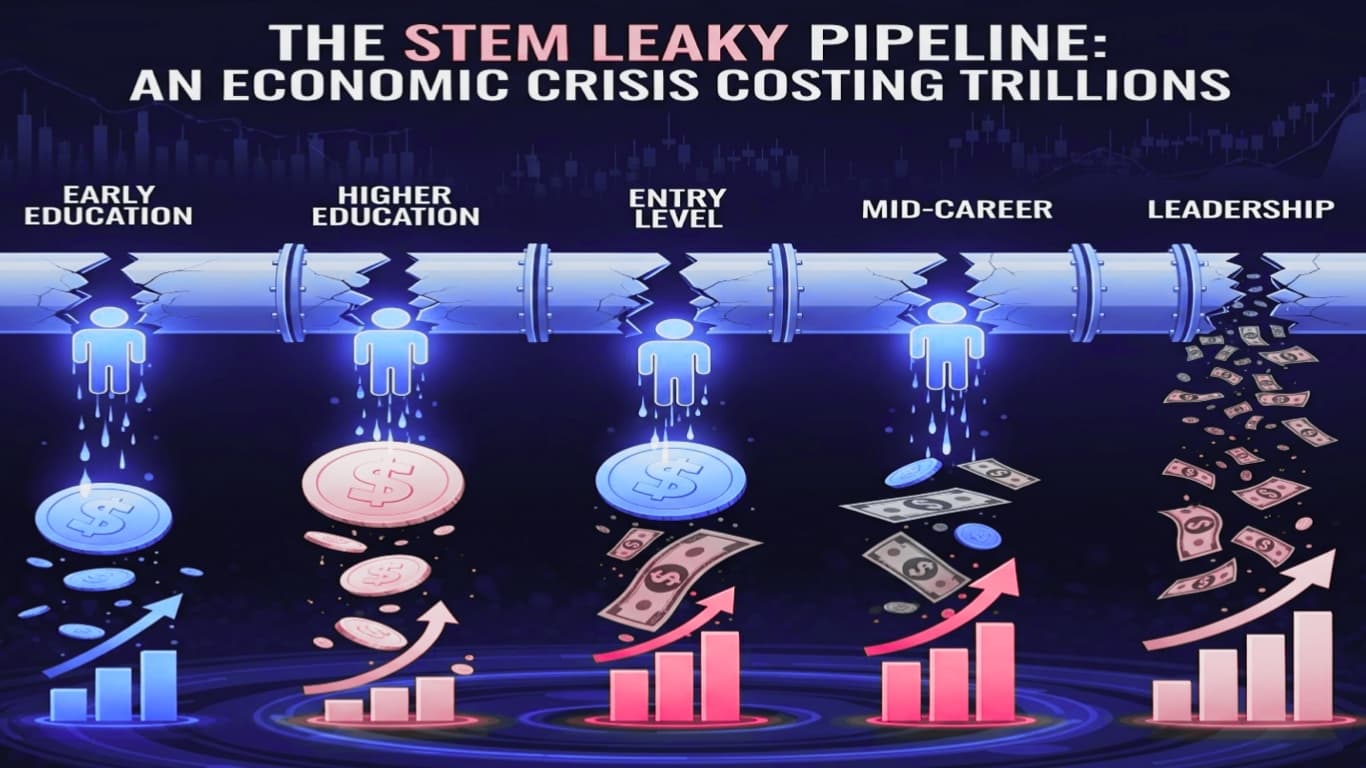
The STEM workforce leaky pipeline is a pressing issue. It affects both social and economic landscapes. High-potential talent is lost at various stages.
This loss is not just a social concern. It poses a significant economic threat. Innovation and growth depend on a robust STEM workforce.
Addressing this issue is crucial. We must transform potential into power. This involves effective workforce training and skills development.
Job readiness programs play a vital role. They bridge the gap between education and employment. This ensures a steady flow of skilled professionals.
Collaboration is key. Educational institutions, industry leaders, and policymakers must work together. Together, they can build a stronger future workforce.
Summary
The STEM leaky pipeline drains high-potential talent at every stage, creating both social inequity and an economic crisis that constrains innovation and growth. Key barriers include limited access and exposure, systemic biases, sparse role models, and misalignment between education and industry needs. Solutions center on mentorship, inclusive resources, aligned curricula, hands-on experiences, continuous upskilling, and technology-enabled training—exemplified by Leadwise’s partnerships with Google Cloud and Workspace. Building job readiness, diverse pathways, and a culture of lifelong learning can convert potential into a resilient, innovative workforce.
Understanding the STEM Workforce Leaky Pipeline
The STEM workforce leaky pipeline is complex. Many students lose interest in STEM fields early. This attrition occurs at critical educational milestones.
Several factors contribute to this leakage. A lack of role models in STEM fields can be discouraging. Insufficient early exposure to STEM subjects also plays a role.
Other barriers exist beyond the classroom. These include limited access to STEM resources and learning opportunities. Social and cultural stereotypes further exacerbate the situation.
Understanding the pipeline involves identifying key leakage points:
- Early education stages where interest wanes
- Transition from school to higher education
- Entry into the job market and early career stages
Efforts to comprehend this issue have increased. Researchers and educators are focusing on finding solutions. Identifying and addressing these leaks is essential for economic innovation and growth. Addressing the leaky pipeline requires a comprehensive approach. Mentorship, resources, and inclusivity can all help turn potential into sustainable power.
Why the Leaky Pipeline Is an Economic Crisis
The leaky pipeline isn't merely a societal challenge. It's a pressing economic issue. As STEM fields drive innovation, losing potential talent impacts growth.
Innovation and technology are crucial for global competitiveness. Without a strong STEM workforce, industries struggle to advance. This limits economic potential.
Furthermore, the pipeline leaks talent from diverse backgrounds. This results in a homogenous workforce. A lack of diversity stifles creativity and limits new ideas.
Addressing the leaky pipeline can have broad economic benefits:
- Enhanced innovation and competitiveness
- Increased diversity leading to varied perspectives
- Improved global standing through advanced technology
To remain economically viable, we must act quickly. Supporting potential talent can transform workforce capabilities. By doing so, we secure a prosperous, innovative future.
Key Barriers to STEM Workforce Development
STEM workforce development faces significant hurdles. A major issue is the lack of access to quality education. Many students never get the chance to explore STEM subjects deeply.
Underrepresented groups face additional challenges. These can be cultural, financial, or systemic biases. These barriers result in a less diverse STEM workforce.
Industry and education often lack alignment. Skills taught in schools may not match industry needs. This skills gap leads to less effective workforce training.
Let's look at some key barriers:
- Limited access to quality STEM education
- Systemic biases affecting underrepresented groups
- Misalignment between educational curricula and industry demands
It's vital to acknowledge these obstacles. Only then can effective solutions be crafted. By removing these barriers, we pave the way for a stronger STEM workforce. This requires collaborative effort from educators, policymakers, and industry leaders.
Turning Potential into Power: Solutions for Workforce Training and Skills Development
To address the STEM leaky pipeline, we need innovative solutions. Workforce training must evolve to meet the demands of modern industries. This includes a focus on both technical and soft skills development.
Mentorship programs can play a crucial role. Experienced professionals can guide newcomers. This support helps reduce attrition rates in STEM fields and enhances job readiness.
Partnerships between academia and industry are essential. These collaborations can tailor educational programs to real-world needs, making students more prepared for STEM careers. Industry involvement ensures that skills taught are relevant and current.
Key strategies include:
- Implementing mentorship and support networks
- Aligning curricula with industry requirements
- Promoting hands-on learning experiences through internships
Upskilling is another critical factor. Workers need constant skill updates to keep up with technological advancements. Continuous learning empowers individuals to transition smoothly through career development stages. By investing in these solutions, we can transform potential into a powerful future workforce.
The Role of Leadwise as a Google Cloud and Workspace Partner
Leadwise plays a pivotal role in bridging the technology gap. As a Google Cloud and Workspace partner, they offer advanced tools that enhance workforce training. This collaboration allows for a seamless integration of technology in skills development.
These tools offer dynamic learning environments. Leadwise ensures learners access resources that upgrade their technical expertise. This fosters a culture of continuous improvement and innovation in STEM careers.
Moreover, with cloud-based solutions, Leadwise facilitates flexible learning. This approach adapts to various learning styles, making it more inclusive. It empowers individuals to become job-ready in our fast-paced, tech-driven world.
Building Job Readiness and Career Development Pathways
Job readiness is critical for a seamless transition from education to employment. Developing a strategic approach ensures students gain practical skills needed in today's job market. This focus equips them not only to fill roles but also to excel in them.
Career development pathways should be personalized and flexible. By aligning educational curricula with industry demands, individuals can develop relevant skills. Real-world experience through internships and apprenticeships is invaluable.
To enhance job readiness and career development, consider:
- Offering mentorship and networking opportunities.
- Aligning skills training with industry needs.
- Providing resources for continuous learning.
These initiatives help individuals advance in STEM careers. They ensure a robust and adaptable workforce ready for future challenges.
The Future of STEM Careers: Innovation, Inclusion, and Lifelong Learning
The future of STEM careers lies in our ability to adapt. Embracing change means fostering innovation and continuously pushing boundaries. Companies that innovate stay competitive and create more opportunities.
Inclusion is integral to sustaining the STEM pipeline. We need to address underrepresentation and ensure diverse voices are heard. This will lead to a vibrant and dynamic workforce.
Lifelong learning enables continued growth in STEM fields. Workers must consistently update their skills to meet evolving demands. Here's how to nurture the future of STEM:
- Encourage cross-disciplinary approaches.
- Support underrepresented groups.
- Invest in upskilling and reskilling.
These strategies propel us towards a sustainable and inclusive future. The benefits extend far beyond economic growth, shaping a better world.
Bridging the Gap for a Stronger STEM Workforce
To secure a thriving economy, we must fix the STEM leaky pipeline. Collaborative efforts can transform potential into lasting impact. By investing in education, inclusion, and workforce training, we lay a strong foundation. The journey requires commitment, innovation, and empathy. Together, we can shape a resilient and diverse future workforce.
Call for Tech Professionals: 10 Hours to Mentor the Future
Your industry expertise is critical. We need Tech Professionals to review student portfolios and validate the next generation of talent.
- Commitment: 10 total hours (1 hour/week for 10 weeks).
- Impact: Texas Instruments & Dell Employees—mentorship time counts toward the Volunteer Incentive Program (VIP) to directly fund student scholarships.